
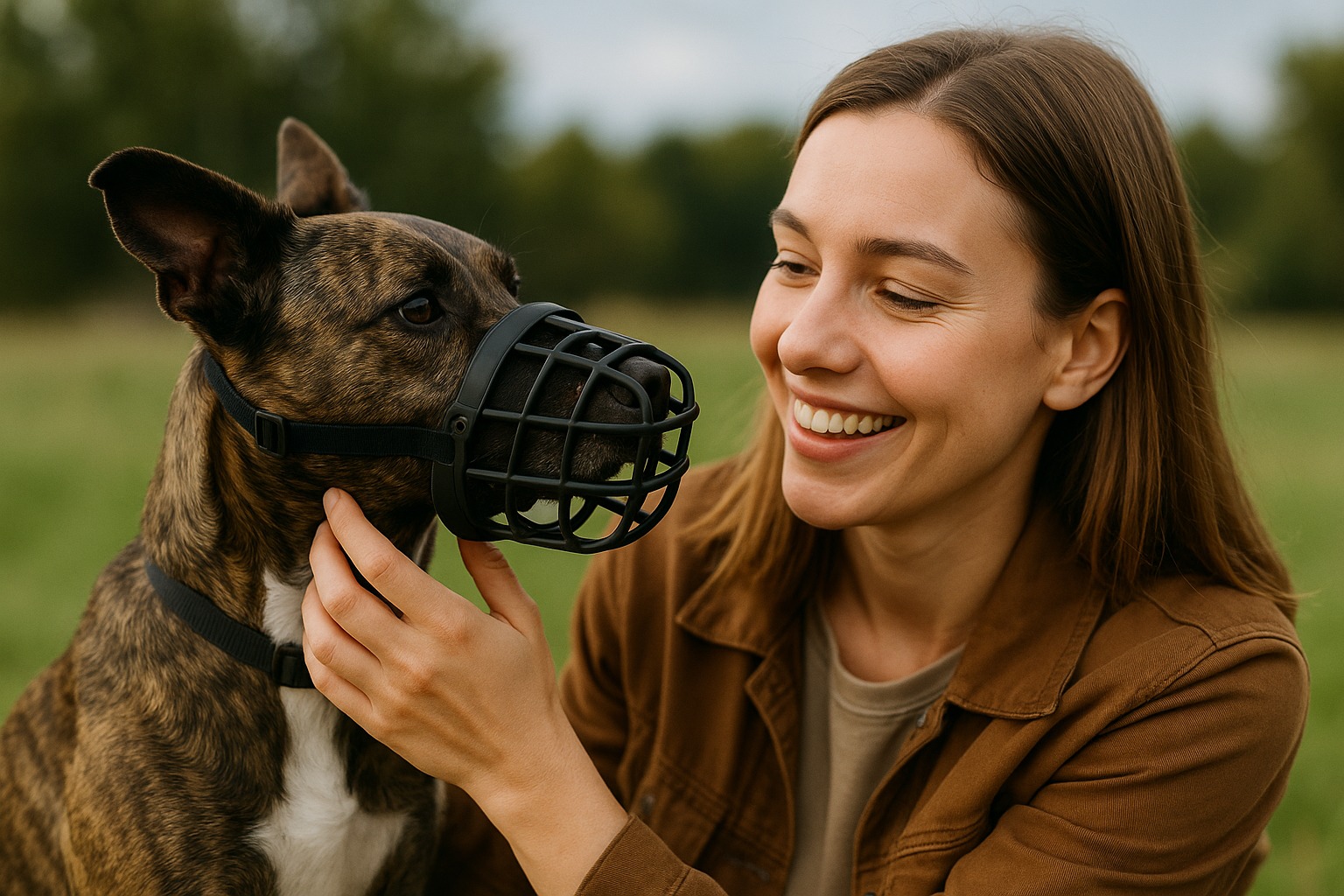
Different breeds need different muzzles. A muzzle that works well on a German Shepherd won’t suit a Rottweiler, and neither will fit a Staffie or a flat-faced breed like a French Bulldog. Getting the right muzzle for your dog’s breed means matching the shape, size, strength, and purpose to their specific face structure and temperament.
At Slaneyside Kennels, we’ve been supplying muzzles to Irish dog owners, breeders, and the greyhound racing industry since 1983. This guide covers which muzzle type works best for every major breed — from restricted breeds that must be muzzled by law in Ireland to dogs that simply need a safe muzzle for vet visits, grooming, or reactive behaviour.
The best muzzle for a German Shepherd is a sturdy basket muzzle or wire muzzle with a medium-length cage, wide circumference, and reinforced construction. German Shepherds have a strong, medium-length snout with powerful jaws, so the muzzle must be robust enough to withstand pressure without bending or flexing.
What to look for in a German Shepherd muzzle:
German Shepherds are a restricted breed under Irish law, meaning they must be muzzled in all public places under the Control of Dogs Regulations 1998. This makes choosing a comfortable, durable muzzle especially important — your GSD will wear it frequently and for extended periods.
For wire muzzles that provide maximum airflow and durability, browse our range of wire and kennel muzzles here. While our wire muzzles are designed for greyhound-shaped faces, the same construction quality applies — contact us for advice on suitability for your GSD.
Rottweilers need a wide, deep basket muzzle or heavy-duty wire muzzle built to handle their broad jaw and powerful bite. Their short, wide snout shape is very different from longer-faced breeds, so a muzzle designed for a German Shepherd or Labrador won’t fit a Rottweiler correctly.
Rottweilers are a restricted breed in Ireland and must be muzzled in public. They also require a strong lead no longer than 2 metres. Given the daily use requirement, investing in a well-fitting, comfortable muzzle is essential for your Rottweiler’s quality of life.
Staffies and Pit Bull types need a short, wide basket muzzle with extremely strong construction and secure fastenings. These breeds have broad, muscular jaws and relatively short snouts, which means standard medium-length muzzles will overshoot the nose while being too narrow at the sides.
American Pit Bull Terriers, English Bull Terriers, and Staffordshire Bull Terriers are all restricted breeds in Ireland. XL Bully dogs face additional restrictions — as of October 2024, breeding, importing, and rehoming XL Bullies is banned, and existing registered dogs must be muzzled in public.
Labradors and Golden Retrievers suit a standard medium-sized basket muzzle with a comfortable fit and good ventilation. These breeds aren’t on Ireland’s restricted list, but many owners use muzzles to prevent scavenging (Labs are notorious for eating everything they find) or as a precaution during vet visits.
A soft muzzle is also suitable for Labs and Goldens during short-term situations like vet exams or grooming — but never for walks, exercise, or warm weather, as soft muzzles restrict panting.
Flat-faced (brachycephalic) breeds need short-snout muzzles specifically designed for their compressed facial structure — standard muzzles will not fit.
Key considerations for flat-faced breeds:
French Bulldogs, Pugs, and Boxers are not on Ireland’s restricted breed list, so muzzle use is typically for vet visits, grooming, or managing reactive behaviour rather than legal compliance.
Greyhounds and other sighthounds need breed-specific muzzles with an elongated, narrow cage that follows the unique taper of their long snout. Standard dog muzzles are far too short and wide for a greyhound’s face.
Slaneyside stocks a full range of sighthound muzzles:
For a full sizing guide with measurements and charts, see our greyhound muzzle size guide.
Regardless of breed, you need two measurements: snout length and snout circumference.
If between sizes, always choose the larger option. A slightly loose muzzle can be adjusted with the head strap — a muzzle that’s too tight cannot be made bigger.
Introduce any new muzzle gradually over 5–7 days using treats and positive reinforcement.
Never force the muzzle on or use it as punishment. Most dogs — including restricted breeds that wear muzzles daily — adapt fully within 1–2 weeks when handled correctly.
| Need help choosing the right muzzle for your dog’s breed? Contact our team on WhatsApp at +353 85 172 5675 or call +353 87 795 9550. Tell us the breed and we’ll recommend the right type and size. |
A sturdy basket muzzle or wire muzzle with reinforced construction, a secure over-head strap, and padding at the nose bridge. German Shepherds have strong jaws and are a restricted breed in Ireland, so the muzzle must be durable enough for daily extended wear while allowing full panting and drinking. Avoid lightweight plastic muzzles, which may flex or crack under pressure.
Yes. Rottweilers are on Ireland’s restricted breed list under the Control of Dogs Regulations 1998. They must be muzzled and kept on a strong lead (under 2 metres) in all public places. Failure to comply can result in an on-the-spot fine of up to €300. Rottweilers need a wide, deep basket muzzle built for their broad jaw.
Yes. German Shepherds (Alsatians) are classified as a restricted breed in Ireland and must be muzzled and leashed (under 2 metres) whenever they are in a public place. This applies regardless of the individual dog’s temperament or training.
For daily wear, a basket muzzle with interior padding and an adjustable head strap provides the best comfort. The basket design allows full panting, drinking, and treat-taking, making it safe for extended periods. For greyhounds and sighthounds, lightweight nylon kennel muzzles are the most comfortable option. The key is correct sizing — any muzzle is uncomfortable if it’s the wrong size.
XL Bullies need an extra-wide, heavy-duty basket muzzle or wire muzzle built for their broad skull and powerful jaw. As of October 2024, XL Bully dogs in Ireland face strict regulations — existing registered dogs must be muzzled in public, and breeding, importing, and rehoming is banned. Choose the strongest muzzle available with an over-head safety strap.
No. Soft muzzles hold the mouth closed and restrict panting and drinking, making them unsafe for walks, exercise, or warm weather. They should only be used for very short periods (under 15 minutes) during vet visits or grooming. For walks and daily use, always choose a basket muzzle or wire muzzle that allows the dog to pant freely.
A basket muzzle is the best option for preventing scavenging on walks. The cage design has gaps large enough for panting and drinking but small enough to prevent the dog from picking up food, rubbish, or other items from the ground. This is especially useful for Labradors and other breeds that compulsively eat anything they find.
WhatsApp Us