
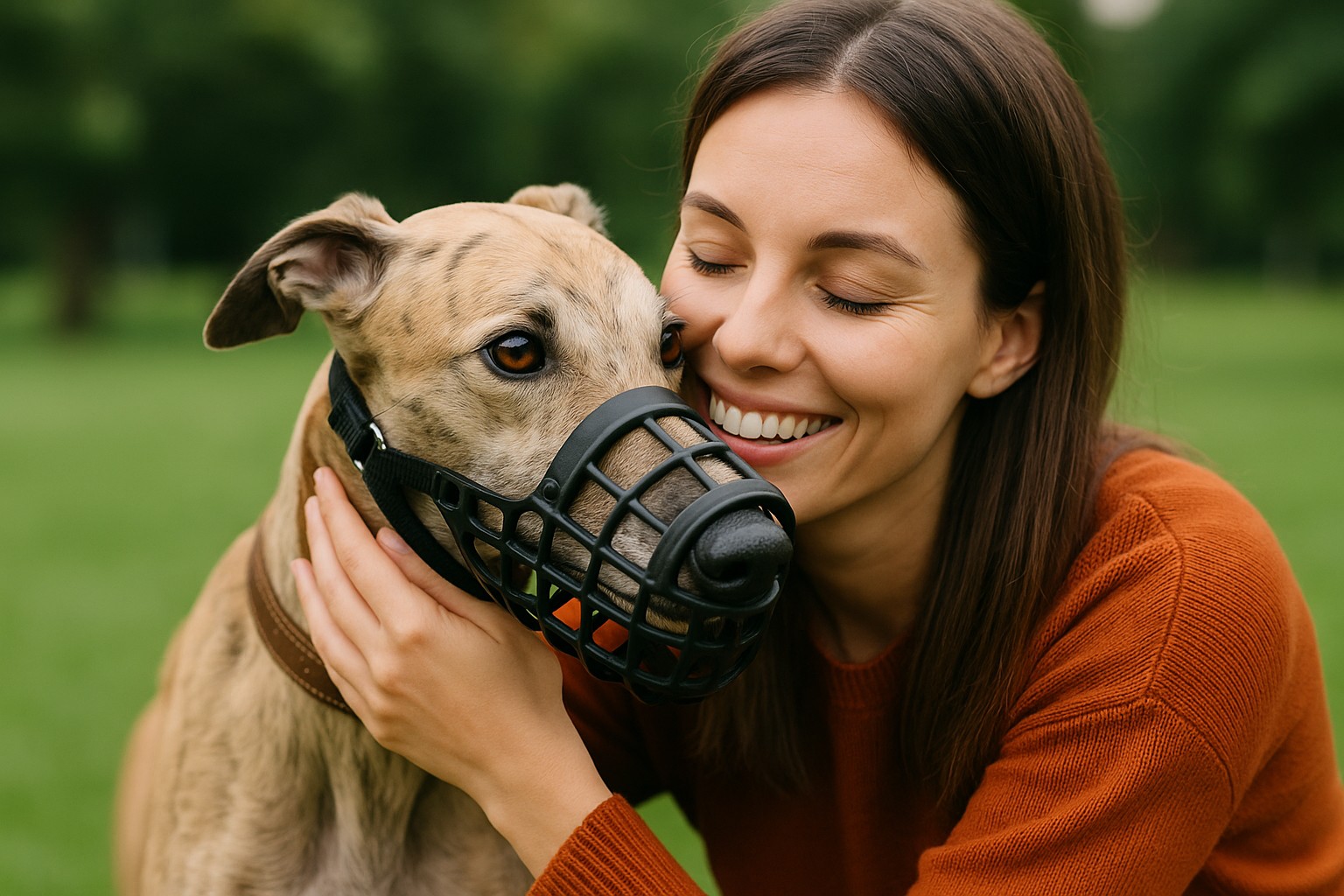
Getting the right muzzle size for your greyhound is essential — a muzzle that’s too tight restricts breathing and causes distress, while one that’s too loose can slip off or rub. Greyhounds have a unique head shape that makes standard dog muzzles unsuitable, so you need to measure carefully and choose a muzzle designed specifically for sighthounds.
At Slaneyside Kennels, we’re one of Ireland’s leading suppliers of greyhound muzzles — from wire racing muzzles approved for Irish and international greyhound racing to kennel muzzles for everyday use. This guide covers exactly how to measure your greyhound, which size to choose, and which muzzle type suits different situations.
Greyhounds are dolichocephalic — they have a long, narrow skull and an elongated snout that is significantly different from most other dog breeds. This means standard dog muzzles designed for broader-faced breeds will not fit a greyhound properly. A generic muzzle will either pinch the sides of the snout, sit too far forward on the nose, or leave too much gap at the sides for the dog to work it off.
Greyhound-specific muzzles are shaped to follow the long, tapered contour of the sighthound face. They provide:
This same shape requirement applies to other sighthound breeds including lurchers, whippets, salukis, and borzois — though the size will vary. If you have a lurcher (greyhound cross), measure as described below and choose accordingly.
You need two measurements to find the correct muzzle size: the length of the snout and the circumference (girth) around the snout. Use a soft fabric measuring tape (tailor’s tape) for accuracy.
Measure from the tip of the nose to approximately 1cm below the eyes, running the tape along the top of the snout. Keep the tape straight, not curved around the nose. This gives you the usable muzzle length — the distance the muzzle cage needs to cover.
At the same point (1cm below the eyes), wrap the tape all the way around the closed mouth. Keep the tape snug but not tight — don’t compress the fur or skin. This gives you the snout girth. Write this number down exactly.
The muzzle’s internal circumference must be at least 2.5cm (1 inch) larger than your dog’s snout girth. This extra space allows your greyhound to open its mouth, pant freely, and drink water while wearing the muzzle. Without this panting room, the muzzle will cause overheating and stress — especially dangerous during exercise or warm weather.
When trying the muzzle on, check that your greyhound can fully open its mouth inside the cage, pant with its tongue out, drink water from a bowl, and move its jaw naturally. The muzzle should sit 1–2cm from the nose tip (not pressing against it), sit firmly behind the ears without sliding forward, and not rub or press on the eyes. If the muzzle fails any of these checks, try a different size.
Greyhound muzzle sizes are typically numbered from 1 (smallest) to 9 (largest), with most adult greyhounds falling between sizes 4 and 7. The exact sizing depends on the manufacturer and muzzle type. Here’s a general guide:
| Size | Snout Length | Snout Circumference | Typical Dog |
|---|---|---|---|
| 1–2 | 13–16cm (5–6.5″) | 18–21cm (7–8.5″) | Small whippets, small lurchers |
| 3–4 | 16–19cm (6.5–7.5″) | 21–24cm (8.5–9.5″) | Small greyhounds, large whippets, medium lurchers |
| 5–6 | 19–22cm (7.5–8.5″) | 24–27cm (9.5–10.5″) | Average adult greyhounds (most common sizes) |
| 7–8 | 22–25cm (8.5–10″) | 27–30cm (10.5–12″) | Large male greyhounds, large lurchers |
| 9 | 25cm+ (10″+) | 30cm+ (12″+) | Extra-large males, borzois, large deerhounds |
For Millers Australian Racing Muzzles (the wire racing muzzles we stock), sizes are colour-coded by the PVC head and neck bands. These muzzles are officially approved for greyhound racing in Ireland and internationally, with 9 sizes available.
If your greyhound’s measurements fall between two sizes, always choose the larger size. A slightly loose muzzle is far safer than one that’s too tight — you can adjust the head strap for a snugger fit, but you can’t add room inside the cage.
The two main types of greyhound muzzle are wire racing muzzles and plastic/nylon kennel muzzles — each designed for different situations.
Wire muzzles are the standard for greyhound racing, coursing, and exercise. They’re lightweight, provide excellent airflow, and allow full visibility for the dog. Our Millers Australian Racing Muzzles are handmade from spring-tempered stainless steel wire with silver-content solder on all crossover points — making them extremely strong and durable. They’re the most widely used racing muzzle in Irish greyhound racing.
Kennel muzzles are used for everyday situations — walks, vet visits, kennel stays, and public spaces where muzzles are required. Our Kennel Pal and Standard Kennel Muzzles are made from durable nylon with leather straps and PVC nosebands. They’re lighter and softer than wire muzzles, making them comfortable for extended wear.
Browse the full range of greyhound muzzles here.
In Ireland, greyhounds are not legally required to wear muzzles in all public spaces, but muzzles are mandatory during racing and coursing events. Many greyhound owners choose to muzzle their dogs in public as a precaution — particularly with ex-racing greyhounds who may retain a strong prey drive.
Situations where a muzzle is recommended or required:
A well-fitted muzzle is not a punishment — it’s a safety tool that protects your greyhound and others. Most greyhounds adapt quickly when introduced gradually with positive reinforcement.
Introduce a new muzzle gradually over several days using positive association — never force it on.
If your greyhound paws at the muzzle or shows signs of stress, go back a step and progress more slowly. Patience makes a permanent difference — rushing the process creates lasting anxiety. For more advice on choosing the right muzzle for your greyhound, read our guide to the best greyhound muzzles.
These are the most common mistakes we see greyhound owners make when choosing a muzzle size:
| Need help choosing the right muzzle size? Contact our team on WhatsApp at +353 85 172 5675 or call +353 87 795 9550. Send us your measurements and we’ll recommend the right size and type. |
Most adult greyhounds need a muzzle in sizes 5–7, but you should always measure your individual dog rather than guessing. Measure the snout length (tip of nose to 1cm below eyes) and circumference (around the closed mouth at the same point). The muzzle must be at least 2.5cm larger in circumference than the snout measurement to allow panting and drinking.
Use a soft fabric tape measure. For length, measure along the top of the snout from the nose tip to 1cm below the eyes. For circumference, wrap the tape around the closed mouth at the same point — snug but not tight. Record both measurements in centimetres and compare to the manufacturer’s size chart. Always add at least 2.5cm to the circumference for panting room.
Muzzles are mandatory for greyhound racing and coursing events in Ireland. For general public use, greyhounds are not legally required to be muzzled in all situations, but many owners choose to muzzle their dogs as a precaution — particularly ex-racing greyhounds who may have a strong prey drive. Muzzles are also commonly used during vet visits, on public transport, and in multi-dog environments.
For everyday use, nylon kennel muzzles (like the Kennel Pal range) are the most comfortable for extended wear — they’re lightweight, soft, and don’t press hard against the snout. For racing and exercise, wire muzzles provide the best airflow and visibility. The key to comfort in any muzzle is correct sizing — a well-fitted wire muzzle is more comfortable than a poorly fitted nylon one.
No. Standard dog muzzles are designed for broader-faced breeds and will not fit a greyhound’s long, narrow snout correctly. They’ll either pinch at the sides, press against the nose tip, or leave gaps that allow the dog to work the muzzle off. Always use a muzzle designed specifically for sighthounds (greyhounds, lurchers, whippets, salukis).
Lurchers (greyhound crosses) vary widely in head shape and size depending on the cross. Measure your lurcher’s snout exactly as you would a greyhound — length and circumference — and match to the size chart. Many lurchers fall between sizes 3 and 6. A lurcher with a broader head (collie cross, for example) may need a slightly wider muzzle than a pure greyhound of the same snout length.
WhatsApp Us