
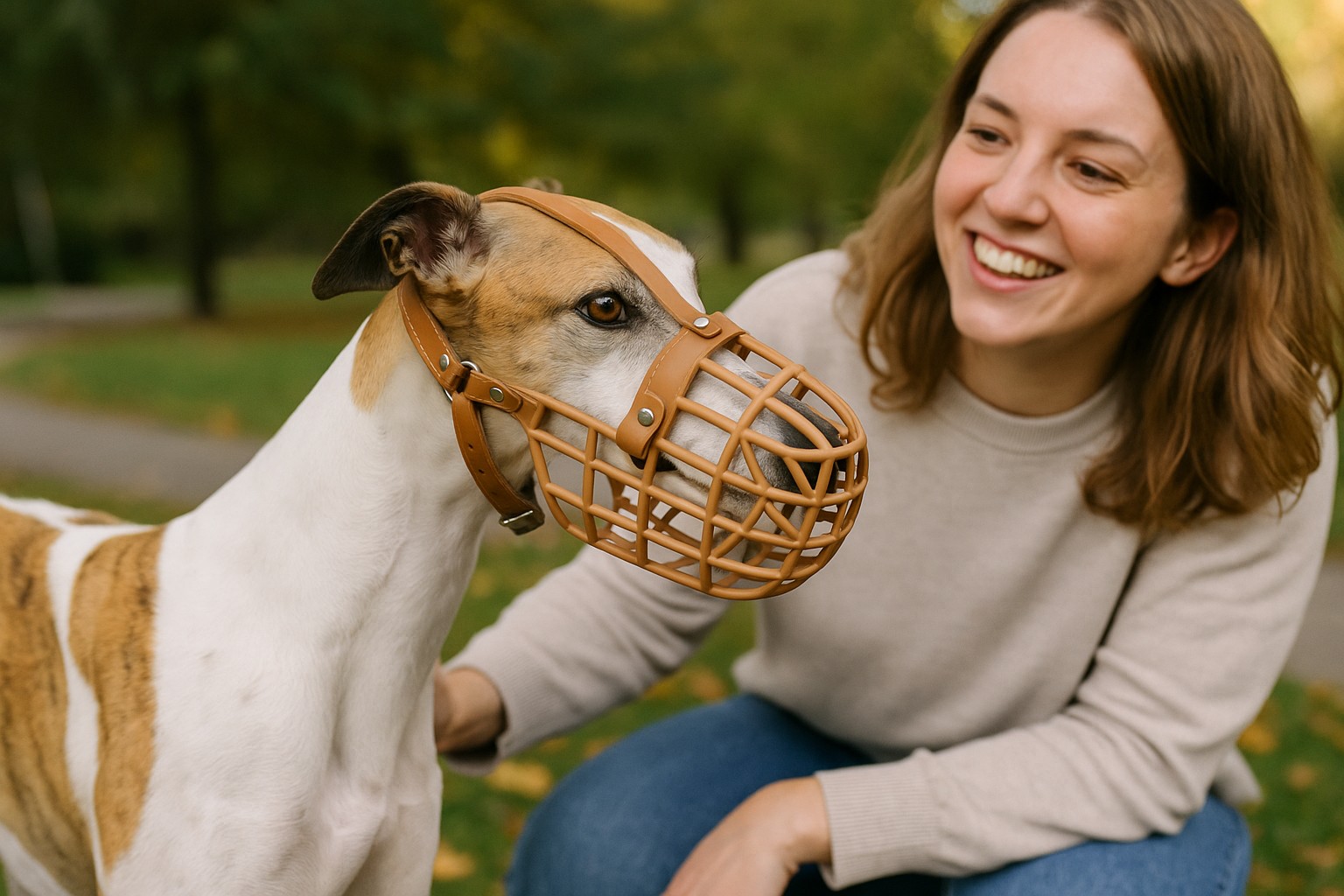
Choosing the right dog muzzle means matching the type, size, and material to your dog’s breed, face shape, and the situation you’ll use it in. Whether you need a muzzle for legal compliance with Ireland’s restricted breed regulations, for managing prey drive during walks, or for safety during vet visits and grooming, the right muzzle keeps everyone safe while keeping your dog comfortable.
At Slaneyside Kennels, we’ve been supplying muzzles to dog owners, trainers, and the greyhound racing industry across Ireland since 1983. We stock wire racing muzzles, kennel muzzles, and basket muzzles for all breeds. This guide covers every type of muzzle, which dogs must be muzzled in Ireland, how to get the right fit, and how to train your dog to accept one.
Under the Control of Dogs Regulations 1998, certain breeds must be muzzled and kept on a strong lead (no longer than 2 metres) whenever they are in a public place in Ireland. Failure to comply can result in an on-the-spot fine of up to €300.
The restricted breeds that must be muzzled in public are:
As of October 2024, XL Bully dogs face additional restrictions — existing registered dogs must also be muzzled in public. Greyhounds are not on the restricted list, but muzzles are mandatory during racing and coursing events, and many greyhound owners muzzle voluntarily due to their dog’s prey drive.
The four main types of dog muzzle are basket muzzles, wire muzzles, soft muzzles, and kennel muzzles — each designed for different situations and breeds.
Best for: daily walks, legal compliance, extended wear, preventing biting and scavenging.
Basket muzzles are the most versatile and widely recommended type. The open cage design allows your dog to pant fully, drink water, and accept treats — making them safe for extended wear in all weather. Available in plastic, rubber, and wire. This is the top recommendation for restricted breeds that must wear a muzzle daily, for dogs that scavenge on walks, and as an all-purpose muzzle for any breed.
Best for: greyhounds, racing, strong breeds, maximum airflow and durability.
Wire muzzles provide the best ventilation and visibility of any muzzle type. They’re virtually impossible for a dog to crush or chew through, making them ideal for powerful breeds. Our Millers Australian Racing Muzzles are handmade from spring-tempered stainless steel with silver-content solder — the standard racing muzzle in Irish greyhound racing. Available in 9 colour-coded sizes. Wire muzzles are also an excellent choice for German Shepherds, Rottweilers, and other strong-jawed breeds.
Best for: short-duration use only — vet visits, grooming, nail clipping. Maximum 10–15 minutes.
Soft muzzles wrap around the snout and hold the mouth closed or nearly closed. They’re lightweight, compact, and less intimidating in appearance. However, they restrict panting and drinking, so they should never be used for walks, exercise, or warm weather. A dog wearing a soft muzzle during activity is at risk of overheating. Use them only for brief, controlled situations where bite prevention is the sole concern.
Best for: kennel stays, everyday use, greyhounds and sighthounds.
Lightweight nylon muzzles with leather or PVC straps, designed for comfortable extended wear. Our Kennel Pal and Standard Kennel Muzzles are popular with greyhound owners for daily walks and multi-dog environments — softer and lighter than wire or basket muzzles.
Browse the full range of dog muzzles here.
You need two measurements to find the correct muzzle size: snout length and snout circumference.
When trying the muzzle on, check that your dog can:
The muzzle should sit 1–2cm from the nose tip (not pressing against it), sit firmly behind the ears without sliding forward, and not rub the eyes. If between sizes, always choose the larger option.
For greyhounds and sighthounds, see our detailed greyhound muzzle size guide with a full size chart.
Different face shapes need different muzzle designs — one muzzle does not fit all.
For breed-specific recommendations with detailed advice on German Shepherds, Rottweilers, Staffies, and more, see our guide to the best muzzle for every breed.
Introduce any new muzzle gradually over 5–7 days using treats and positive reinforcement — never force it on.
If your dog paws at the muzzle or shows stress, go back a step. Most dogs — including restricted breeds that wear muzzles daily — adapt fully within 1–2 weeks when handled correctly. Never use the muzzle as punishment.
Slaneyside Kennels stocks a range of muzzles for all breeds, available online with nationwide delivery across Ireland.
| Not sure which muzzle is right for your dog? Contact our team on WhatsApp at +353 85 172 5675 or call +353 87 795 9550. Tell us the breed and we’ll recommend the right type and size. |
Under the Control of Dogs Regulations 1998, these breeds must be muzzled in all public places: American Pit Bull Terrier, English Bull Terrier, Staffordshire Bull Terrier, Bull Mastiff, Dobermann Pinscher, German Shepherd, Rhodesian Ridgeback, Rottweiler, Japanese Akita, Japanese Tosa, Bandog, and any cross of these breeds. XL Bully dogs must also be muzzled. Fines of up to €300 apply for non-compliance.
Basket muzzles are the most versatile for most situations — they allow panting, drinking, and treat-taking, making them safe for extended wear. Wire muzzles offer maximum durability and airflow for strong breeds and racing. Soft muzzles should only be used for very short periods (under 15 minutes) as they restrict panting. Kennel muzzles are a lightweight option for everyday walks.
A sturdy basket muzzle or wire muzzle is the safest choice for preventing biting. These provide a rigid cage that the dog cannot bite through or collapse. Wire muzzles are particularly effective for strong breeds. Avoid soft muzzles for bite prevention — determined dogs can sometimes bite through soft material, and the restricted airflow makes them unsuitable beyond brief use.
Measure snout length from the nose tip to 1cm below the eyes along the top. Measure circumference around the closed mouth at the same point. The muzzle must be at least 2.5cm larger in internal circumference than your measurement to allow panting and drinking. If between sizes, always choose the larger size.
Comfort depends on correct fit more than muzzle type. A well-fitted basket muzzle with interior padding is comfortable for extended daily wear. For greyhounds and sighthounds, lightweight nylon kennel muzzles are the most comfortable option. The muzzle must allow full panting, drinking, and jaw movement — any restriction creates discomfort.
Yes — with basket and wire muzzles, your dog can drink through the cage openings. This is a key advantage over soft muzzles, which hold the mouth closed. Any muzzle worn for more than a few minutes must allow the dog to drink freely.
No. Soft muzzles restrict panting and drinking, making them dangerous for walks, exercise, or warm weather. A dog that can’t pant risks overheating. Use soft muzzles only for very brief situations under 15 minutes (vet visits, grooming). For walks, always use a basket or wire muzzle that allows the dog to pant freely.
WhatsApp Us