
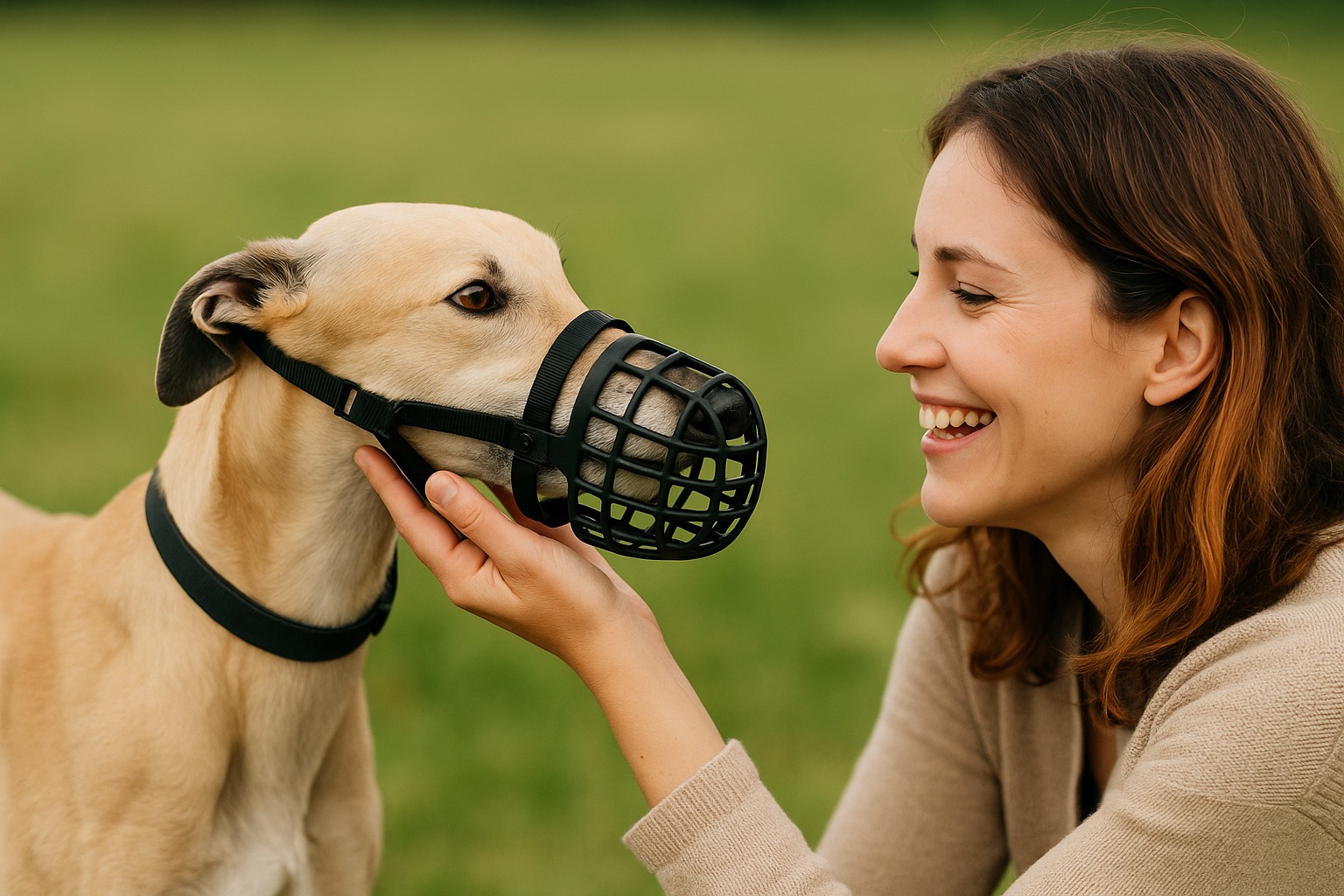
Choosing the right muzzle for your greyhound means finding one that fits their unique head shape, suits how you’ll use it, and keeps your dog comfortable enough to pant, drink, and relax while wearing it. Greyhounds have a long, narrow snout that makes standard dog muzzles unsuitable — you need a muzzle designed specifically for sighthounds.
At Slaneyside Kennels, we’ve been supplying greyhound muzzles to owners, trainers, and racing professionals across Ireland since 1983. We stock wire racing muzzles, kennel muzzles, and basket muzzles — all designed for the greyhound face shape. This guide covers what the pros recommend, how to choose between muzzle types, and answers the most common questions greyhound owners ask about muzzling.
Greyhounds wear muzzles for three main reasons: racing regulations, prey drive management, and owner precaution — not because they’re aggressive. Greyhounds are one of the gentlest dog breeds, but their unique characteristics make muzzles a practical safety tool.
It’s worth emphasising: greyhounds are not on Ireland’s restricted breed list under the Control of Dogs Regulations 1998. Muzzling is not a legal requirement for greyhounds in general public spaces — but it is mandatory during racing events and strongly recommended by experienced owners and rescue groups.
The best greyhound muzzle depends on how you’ll use it — wire racing muzzles for exercise and racing, kennel muzzles for everyday walks, and basket muzzles for general-purpose use. Here are the muzzle types recommended by professional trainers and experienced greyhound owners:
The gold standard for greyhound racing in Ireland and internationally. Millers Australian Racing Muzzles are handmade from spring-tempered stainless steel wire with silver-content solder on all crossover points, making them exceptionally strong and lightweight. The open wire cage provides maximum airflow and visibility — essential for racing, coursing, and high-intensity exercise. Available in 9 colour-coded sizes with PVC head and neck bands. These are the most widely used racing muzzle in the Irish greyhound industry and the muzzle most professional trainers recommend.
Our most popular everyday muzzle for greyhound owners. The Kennel Pal is made from durable nylon with leather straps, providing a comfortable, lightweight fit for daily walks, vet visits, and kennel stays. It’s softer and lighter than wire muzzles, making it ideal for extended wear. The design allows full panting and drinking while still preventing nipping. A favourite with ex-racing greyhound owners and rescue adopters.
A reliable, affordable option for everyday use. The Standard Kennel Muzzle features a nylon body with a PVC noseband and adjustable straps, available in separate dog and bitch sizes. It’s easy to clean, durable, and provides a comfortable fit for greyhounds and lurchers. A good choice for owners who need a no-fuss daily muzzle.
A more affordable wire option than the Millers Australian. Standard Wire Racing Muzzles are lightweight and durable, providing excellent ventilation for exercise and training. Suitable for both racing and general outdoor use where maximum airflow is a priority.
Browse the full range of greyhound muzzles here.
Match the muzzle type to the situation, then get the size right.
| Situation | Best Muzzle Type | Why |
|---|---|---|
| Racing & coursing | Wire racing muzzle | Maximum airflow at speed, mandatory for events |
| Daily walks | Kennel Pal (nylon) | Lightweight, comfortable for extended wear |
| Off-lead exercise | Wire racing muzzle | Best ventilation during activity, won’t restrict panting |
| Vet visits | Kennel muzzle or basket | Prevents stress-nipping, comfortable for waiting |
| Multi-dog kennels | Standard kennel muzzle | Prevents nipping between dogs in close quarters |
| Public transport | Kennel Pal (nylon) | Least intimidating appearance, comfortable for long journeys |
For sizing guidance with measurements and a full size chart, see our greyhound muzzle size guide. The key rule: the muzzle must be at least 2.5cm larger in circumference than your dog’s snout measurement to allow panting and drinking.
Lurchers and whippets share the greyhound’s elongated snout shape and require sighthound-specific muzzles — standard dog muzzles will not fit correctly.
The same muzzle types apply for lurchers and whippets — wire for exercise, nylon kennel muzzle for walks. Always measure your individual dog rather than guessing based on breed averages.
Introduce any new muzzle gradually over 5–7 days with treats and positive reinforcement.
Ex-racing greyhounds often adapt quickly since they’ve worn muzzles during their racing career. Newly adopted rescue greyhounds may need more patience if their previous muzzle experience was stressful. Go at your dog’s pace.
| Need help choosing the right muzzle for your greyhound? Contact our team on WhatsApp at +353 85 172 5675 or call +353 87 795 9550. Send us your measurements and we’ll recommend the right type and size. |
Greyhounds wear muzzles primarily because of their strong prey drive and for safety during racing. Even gentle, well-socialised greyhounds can instinctively chase small animals, cats, or small dogs. During racing and coursing, muzzles are mandatory to prevent nipping when dogs run in close proximity at high speed. Many pet greyhound owners also muzzle as a precaution in busy public spaces or around unfamiliar animals.
Greyhounds are not classified as a restricted breed in Ireland, so muzzling is not a legal requirement in general public spaces. However, muzzles are mandatory during all greyhound racing and coursing events. Many owners choose to muzzle their greyhounds voluntarily as a safety precaution, particularly with ex-racing dogs that may retain a strong prey drive. All dogs in Ireland must be kept on a lead in public places.
It depends on the individual dog. Greyhounds with a known prey drive, those newly adopted from racing, or dogs walked in areas with cats, wildlife, or small dogs benefit from wearing a muzzle on walks. A lightweight nylon kennel muzzle like the Kennel Pal is ideal for walks — comfortable enough for extended wear while preventing nipping. Once you know your greyhound’s temperament well, you can make an informed decision about when muzzling is necessary.
For everyday extended wear, nylon kennel muzzles like the Kennel Pal are the most comfortable — they’re lightweight, soft, and don’t press hard against the snout. For racing and exercise, wire muzzles like the Millers Australian Racing Muzzle provide the best combination of comfort and airflow. The most important factor in comfort is correct sizing — any muzzle is uncomfortable if it’s the wrong size for your greyhound.
Most adult greyhounds need sizes 5–7, but you should always measure your individual dog. Measure snout length from the nose tip to 1cm below the eyes, and circumference around the closed mouth at the same point. The muzzle must be at least 2.5cm larger in circumference than your measurement. If between sizes, choose the larger one. See our full sizing guide with charts for detailed instructions.
Lurchers need sighthound-specific muzzles, just like greyhounds. Because lurchers are crosses, head shapes vary — a collie-greyhound cross will have a different snout profile than a deerhound-greyhound cross. Measure your lurcher’s snout and match to the size chart. Most lurchers fall between sizes 3 and 6 in wire muzzle sizing. The same muzzle types work: wire for exercise, kennel muzzle for everyday walks.
Greyhounds are muzzled during racing to prevent accidental injuries when dogs run in a pack at speeds up to 70 km/h. At these speeds, even a minor nip can cause a serious wound. The wire racing muzzle allows full breathing and visibility while preventing contact between dogs’ mouths. Muzzling during racing is a welfare measure that protects all dogs in the race.
WhatsApp Us