
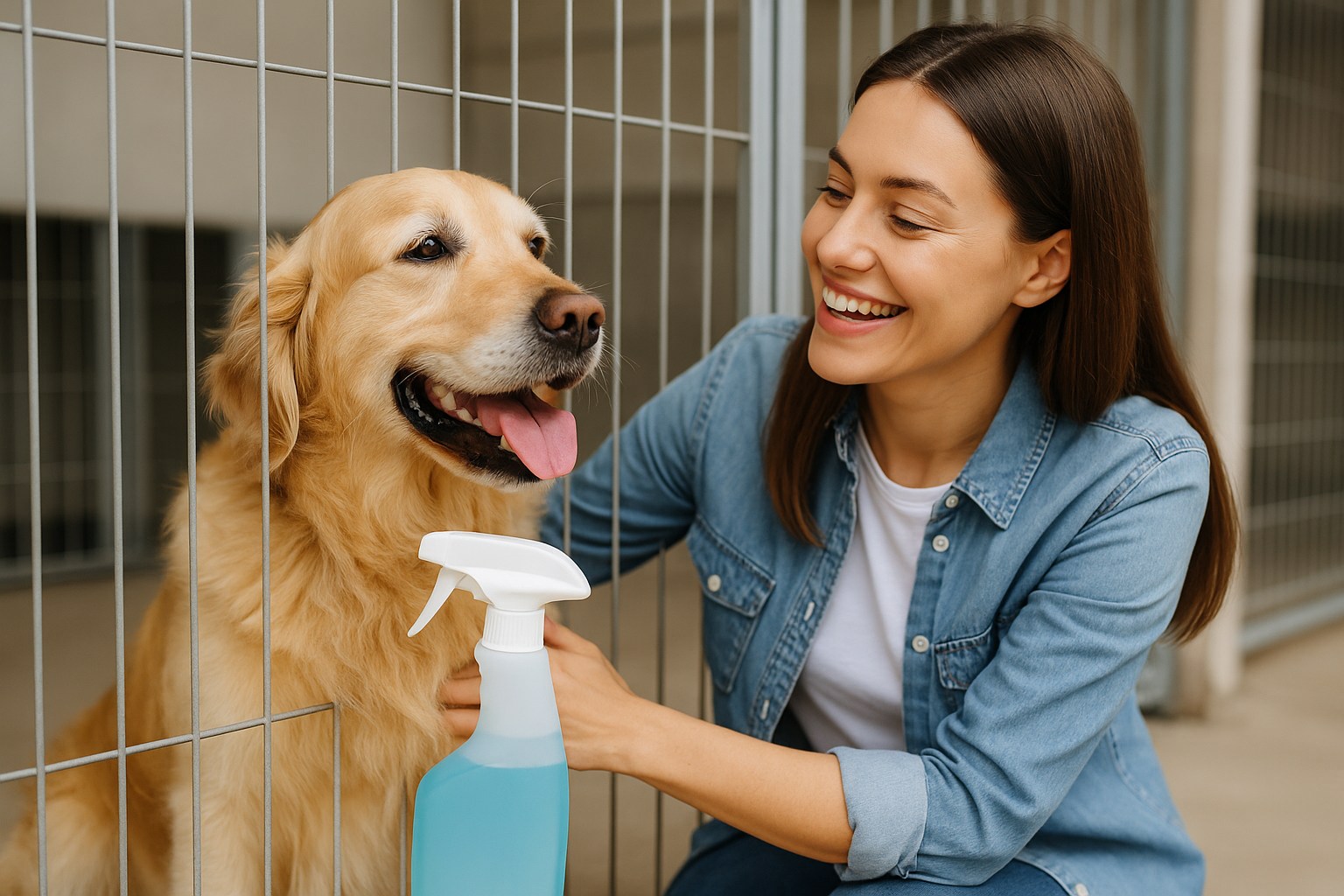
Keeping your dog’s kennel clean and free from disease is one of the most important things you can do as a responsible owner — but not all disinfectants are safe to use around animals. Many standard household cleaners contain chemicals that can irritate your dog’s skin, damage their respiratory system, or even cause poisoning if they lick treated surfaces.
At Slaneyside Kennels, we’ve been supplying kennel cleaning products to dog owners, breeders, boarding kennels, and rescue centres across Ireland since 1983. Our recommended kennel disinfectant is Parvovirucide — a veterinary-grade formula that kills parvovirus, distemper, kennel cough, and ringworm on contact, while remaining safe for use around dogs when diluted correctly.
This guide covers how to choose a pet-safe kennel disinfectant, which diseases your disinfectant needs to kill, how to clean a kennel properly, and which common household products to avoid around dogs.
An effective kennel disinfectant must kill parvovirus, kennel cough (Bordetella), distemper, ringworm, and common bacteria — these are the diseases most commonly transmitted in kennel environments.
When choosing a kennel disinfectant, check the label for specific claims against these pathogens. A product that kills “99.9% of bacteria” may still be ineffective against parvovirus or ringworm spores — these require specialised formulas.
A good kennel disinfectant must be effective against major canine diseases, safe for dogs when diluted correctly, residue-free after drying, and easy to use on kennel surfaces. Here’s what to look for:
At Slaneyside, we stock three kennel hygiene products that cover disinfection and odour control:
Browse the full range of kennel disinfectants and odour control products here.
Most common household disinfectants are NOT safe for use in dog kennels. Here’s a quick guide to what to avoid:
No. Many Dettol products contain chloroxylenol, a phenol-based compound that is toxic to dogs. Contact with concentrated Dettol can cause chemical burns to the mouth, skin, and paws, and ingestion (from licking treated surfaces) can cause liver damage, vomiting, and respiratory distress. Do not use Dettol or similar phenol-based disinfectants in kennels, on bedding, or on feeding equipment.
No. Pine oil disinfectants (including products like Zoflora and similar pine-scented cleaners) contain phenols and essential oils that are toxic to dogs. Dogs are particularly sensitive to phenol compounds — even residual fumes can irritate the respiratory system. Pine-based cleaners should never be used in dog kennels, runs, or on any surface your dog contacts.
Not recommended. While heavily diluted bleach (sodium hypochlorite) can kill many pathogens including parvovirus, it has significant downsides for kennel use. Bleach fumes irritate the respiratory system, it corrodes metal surfaces (including galvanised steel kennel panels over time), it can bleach timber and bedding, and incorrect dilution easily makes it dangerous. Purpose-made kennel disinfectants like Parvovirucide are far safer, just as effective, and don’t damage your kennel infrastructure.
Effective kennel cleaning follows a two-step process: physical cleaning first (removing organic matter), then disinfecting. Disinfectant doesn’t work properly on dirty surfaces — waste, hair, and food residue shield pathogens from the disinfectant solution.
After disinfecting, use Odor Kill to neutralise any remaining kennel odours. Apply it after the disinfection step for a fully clean and fresh-smelling environment.
For multi-dog environments, clean kennels between each dog. In boarding kennels, a full clean-and-disinfect cycle should happen after every guest departure. For domestic kennels, a weekly disinfection routine is usually sufficient, with a deeper clean monthly.
For domestic kennels, disinfect weekly as routine and deep clean monthly. For boarding kennels, disinfect between every guest. Here’s a practical schedule:
Hot-dipped galvanised steel kennel panels — the type we manufacture at Slaneyside — are the easiest material to clean and disinfect because they’re non-porous, don’t absorb moisture, and can be hosed down quickly. This is one of the key hygiene advantages of steel over timber or plastic for kennel construction. For advice on choosing kennels designed for easy cleaning, see our guide to the best dog kennels in Ireland.
Slaneyside Kennels stocks Parvovirucide, Odor Kill, and Odour Fresh — all available online with nationwide delivery across Ireland.
| Need advice on kennel hygiene or disinfectant products? Contact our team on WhatsApp at +353 85 172 5675 or call +353 87 795 9550. |
The best kennel disinfectant is a veterinary-grade formula that kills parvovirus, kennel cough, distemper, and ringworm while being safe for dogs at the recommended dilution. Parvovirucide is the most widely used product in Irish boarding kennels and veterinary practices. Avoid household disinfectants like Dettol, pine-based cleaners, or neat bleach — these contain ingredients toxic to dogs.
Disinfectants specifically formulated for animal environments are safe for dogs when diluted according to the manufacturer’s instructions. Look for products labelled as veterinary-grade or kennel-safe, free from phenols, pine oils, and bleach. Parvovirucide and similar kennel-specific disinfectants are designed to leave no harmful residue after drying, making them safe for dogs that lick treated surfaces.
No. Many Dettol products contain chloroxylenol and other phenol-based compounds that are toxic to dogs. Contact with concentrated Dettol can cause chemical burns, and ingestion from licking treated surfaces can cause liver damage and respiratory distress. Always use a kennel-specific, pet-safe disinfectant instead.
No. Pine oil disinfectants contain phenols and essential oils that are toxic to dogs. Dogs are particularly sensitive to phenol compounds — even residual fumes can cause respiratory irritation. Pine-based cleaners including Zoflora and similar scented disinfectants should never be used in kennels or on surfaces dogs contact.
For domestic kennels, a weekly full disinfection is recommended with daily spot-cleaning and waste removal. Monthly deep cleans should include behind panels, under raised floors, and all accessories. Boarding kennels should fully clean and disinfect between every guest departure. After any suspected infectious illness, deep clean immediately with a parvo-effective disinfectant like Parvovirucide.
Parvovirus is extremely resistant and survives on surfaces for months. Standard household cleaners, antibacterial sprays, and most general disinfectants do not kill parvo. You need a disinfectant that specifically claims parvovirus efficacy — such as Parvovirucide or a veterinary-grade sodium hypochlorite solution at the correct concentration. Physical cleaning must happen first, as organic matter shields the virus from disinfectant.
Yes. Slaneyside Kennels stocks Parvovirucide, Odor Kill, and Odour Fresh online at slaneyside.com with nationwide delivery across Ireland and Northern Ireland. We also carry the full range of kennel construction products, bedding, feeding equipment, and accessories — everything you need for a clean, safe kennel environment.
WhatsApp Us