
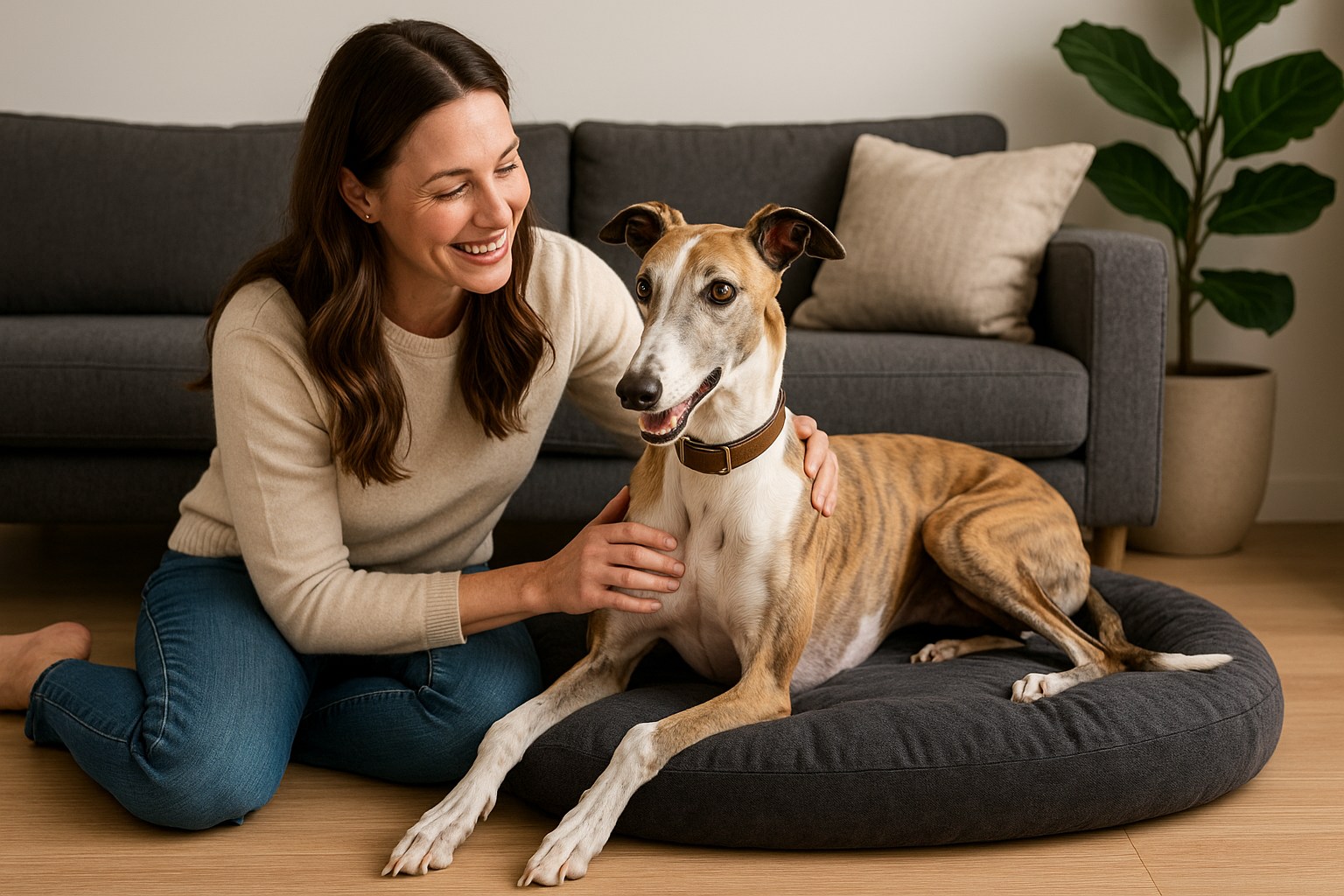
Greyhounds are built differently from other dogs — their lean frame, minimal body fat, thin skin, and bony joints make them especially prone to pressure sores, calluses, and discomfort on hard or poorly padded surfaces. Choosing the right bedding for your greyhound isn’t just about comfort; it’s about protecting their health.
At Slaneyside Kennels, we’ve been supplying bedding to greyhound owners, trainers, and boarding kennels across Ireland since 1983. Our Pet Bedding range is designed specifically for kennel environments — soft, durable, machine-washable, and available in custom sizes to fit any kennel house or dog run.
This guide covers what makes greyhound bedding different, which features to prioritise, and how to set up the ideal sleeping area for your greyhound or lurcher.
Greyhounds have almost no body fat and very thin skin over their bony joints, making them far more susceptible to pressure sores, calluses, and cold than other breeds. Where a Labrador or Collie can sleep comfortably on a basic pad, a greyhound on the same surface will quickly develop painful sores on their elbows, hips, and hocks.
Standard thin mats or blankets are not adequate for greyhounds. They need genuinely thick, cushioned bedding that protects their joints from the surface beneath.
The best greyhound bedding is thick enough to cushion bony joints, machine-washable for hygiene, durable enough to withstand nesting and scratching, and sized to fit your kennel or sleeping area.
Avoid straw, hay, or newspaper as bedding for greyhounds. Straw harbours fleas and mites, hay causes respiratory irritation, and newspaper provides no cushioning. Purpose-made pet bedding is safer, warmer, and easier to maintain.
The best bedding setup for a greyhound combines a padded base layer with a soft, washable top layer — providing both joint protection and warmth.
Our Pet Bedding range is designed specifically for kennel environments. Made from soft, durable fabric with a paw-print design, it provides genuine cushioning for bony joints. Available in individual sizes to fit any kennel house, or as a full roll (1.5m × 15m) for boarding kennels, breeders, and rescue centres who need to cut bedding to custom dimensions. Machine washable and hardwearing — it retains its softness and padding through repeated washes.
A raised dog bed lifts your greyhound off the cold kennel floor, providing insulation from below and airflow underneath. This is particularly important in outdoor kennels where concrete or ground surfaces can be cold and damp. Our raised beds are designed to fit inside Slaneyside dog runs and kennel houses. Layer our Pet Bedding on top of a raised bed for the ultimate combination of cushioning, warmth, and joint protection.
Synthetic fleece bedding (often called “vetbed”) is extremely popular with greyhound owners. It wicks moisture away from the dog’s body, dries quickly, and provides a soft, warm surface. It’s machine washable at high temperatures and comes in various thicknesses. For greyhounds, choose the thicker grades (at least 26mm pile) for adequate joint cushioning. Vetbed is an excellent top layer over a raised bed or padded mat.
For greyhounds with arthritis, joint problems, or recovering from injury, orthopaedic memory foam beds provide the highest level of support. The foam moulds to your dog’s body shape, distributing weight evenly and relieving pressure on joints. Choose beds with removable, washable covers — memory foam itself cannot be machine washed. These are ideal for indoor use or as the primary bed for senior greyhounds.
Browse our Pet Bedding range here — available in individual sizes or full rolls with nationwide delivery.
Lurchers and whippets share the greyhound’s lean build and thin skin, so they need the same type of thick, cushioned bedding.
The same bedding principles apply to all sighthounds: thick cushioning, warmth, washability, and adequate size.
The ideal greyhound sleeping area combines an insulated kennel house, a raised bed, thick bedding, and protection from drafts.
For advice on kennel houses and dog runs that pair with proper bedding, see our guide to the best dog kennels in Ireland.
Wash greyhound bedding at least once a week — more often in wet weather or if your dog has been muddy.
Never use straw or hay as greyhound bedding. It harbours fleas, mites, and fungal spores, causes respiratory irritation, and provides no joint cushioning. Purpose-made washable pet bedding is safer, warmer, and more hygienic.
| Need help choosing the right bedding for your greyhound? Contact our team on WhatsApp at +353 85 172 5675 or call +353 87 795 9550. We can recommend the right size and type for your dog and kennel setup. |
The best bed for a greyhound provides thick cushioning to protect their bony joints, insulation from cold surfaces, and a soft, washable cover. A raised dog bed with layered kennel bedding and fleece on top is the ideal setup. For indoor greyhounds, an orthopaedic memory foam bed with a removable, washable cover works well. The bed must be large enough for your greyhound to stretch out fully — at least 100–120cm in length.
Measure your greyhound lying fully stretched out from nose to tail, then add 15–20cm to both the length and width. Most adult greyhounds need a bed at least 100–120cm long and 70–80cm wide. Greyhounds prefer to stretch out rather than curl up, so avoid beds that are too narrow or have high bolster walls that restrict stretching.
Orthopaedic beds are especially beneficial for senior greyhounds, retired racers with joint wear, and any greyhound showing stiffness or mobility issues. For younger, healthy greyhounds, thick padded kennel bedding provides sufficient joint protection without the cost of a full orthopaedic mattress. The key requirement for all greyhounds is adequate cushioning — their bony joints need protection from hard surfaces regardless of age.
Lurchers need the same type of bedding as greyhounds — thick cushioning, washable fabric, and adequate size. Because lurchers are greyhound crosses, they share the lean build and bony joints that require extra padding. Measure your lurcher stretched out and choose bedding that accommodates their full length. Most lurchers suit the same bedding products as greyhounds.
For greyhounds that nest heavily or scratch at their bedding, a more durable bed can save money in the long run. However, “indestructible” beds are often made from tough materials that sacrifice comfort — and comfort is the top priority for greyhounds. A better approach is choosing well-made kennel bedding with reinforced stitching and durable fabric that balances toughness with adequate padding. Replace bedding when it shows signs of wear rather than waiting for it to fail completely.
Wash greyhound bedding at least once a week at 40–60°C with a pet-safe detergent. In wet weather, after muddy walks, or if your greyhound has been unwell, wash more frequently. Having two sets of bedding ensures your dog always has a clean, dry bed while the other is being washed. Shake out bedding daily to remove hair and debris between washes.
WhatsApp Us